Nalezené produkty
Nalezené kategorie
Nalezení autoři
Nalezené články: 140
Košík
je prázdný
je prázdný

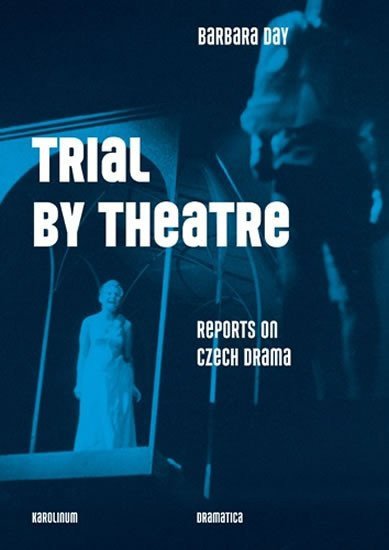
Trial by Theatre
Barbara DayReports on Czech Drama
Cena v prodejně:
420 Kč
Cena při objednávce v e-shopu:
-42 Kč
378 Kč
U dodavatele
poslední kusy na objednávku.
V prodejně do 4 dnů
K vyzvednutí st 26.8 13:00
Odesíláme do 4 dnů
od 59 Kč, dodání čt 27.8
Kdy můžu zboží mít?
Produkt je u dodavatele, odesíláme ho ihned po naskladnění.
Osobní odběr | ||
| Prodejna Benešov - ZDARMA | st 26.8 | |
Výdejní místa | ||
| One Box, One Point | 59 Kč | čt 27.8 |
| Zásilkovna | 69 Kč | čt 27.8 |
| Zásilkovna SK | 95 Kč | pá 28.8 |
Dodání na adresu v ČR | ||
| Stažení online | 0 Kč | st 26.8 |
| One Curier | 65 Kč | čt 27.8 |
| Zásilkovna - domů | 99 Kč | čt 27.8 |
| Zásilkovna SK - domů | 139 Kč | pá 28.8 |
Uvedený termín u dodání domů a na výdejní místa je orientační. Balíček může přijít v rozmezí dvou dní po termínu.
The motto Národ sobě – “From the Nation to Itself” – inscribed over the proscenium arch of Prague’s National Theatre symbolizes the importance theatre holds for the Czechs. During the National Awakening of the 19th century, theatre took the place of politics, becoming an instrument of national identity in the hands of the revivalists. In what was then part of a German-speaking empire, the Czechs devised a complex and evocative theatre language made up of allegory, allusion, juxtaposition, games, wordplay, legend, history, illusion and music. A sophisticated avant-garde theatre flowered in Czechoslovakia between the wars, and became a symbol of independence during the Nazi occupation. It survived Socialist Realism and Stalinism to blossom again in the “Golden Sixties” when Prague became “the theatre capital of Europe” (Kenneth Tynan) and a generation of theatre and film directors (Radok, Grossman, Schorm) and playwrights (Havel, Kundera, Topol) were at the forefront of the Prague Spring. Reprisals took place after the 1968 Soviet invasion when, under “normalization,” hardline Communists tried to silence the voices of the ‘60s; thousands were forced into internal and external emigration. The theatre culture, however, flexible and experienced from previous repression, again provided a basis of opposition to totalitarianism. For two decades it operated in the provisional spaces of culture houses, studios, gymnasiums, bars, trade union halls, art galleries and living rooms. Strategies were devised and implemented to bring freedom back to the theatre and society. A strong sense of justice and ethics intensified the mutual commitment of theatres and audiences, leading the way to the Velvet Revolution of 1989 and the installation of a playwright as President.
| EAN | 9788024639536 |
|---|---|
| ISBN | 9788024639536 |
| Rozměry | 240 x 167 x 18 mm |
| Datum vydání | 13. 03. 2020 |
| Vazba | brožovaná vazba |
| Počet stran | 320 |
| Počet stran: | 320 |
| Nakladatelství: | Karolinum |
| Jazyk: | anglicky |